
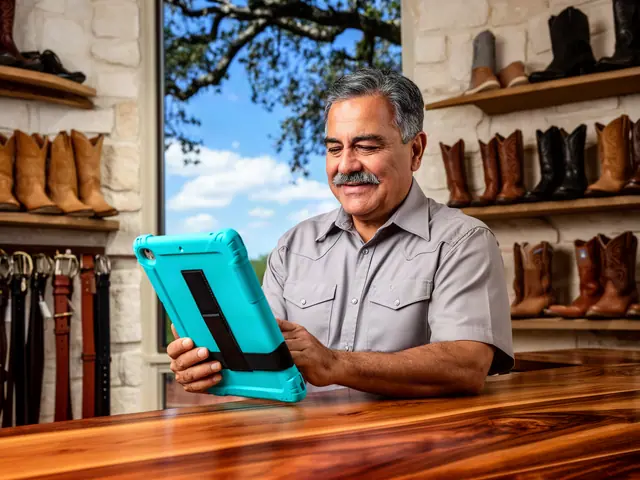
Inventory financing is business funding used to buy goods for resale, typically secured by those goods and repaid as they sell or on a set schedule. Canyonwick Finance, a small-business funding broker in New Braunfels, TX, helps owners judge whether it fits and introduces requests to lending partners, which decide and set the terms.
| Built for | Stock bought ahead of sales |
|---|---|
| Collateral | The inventory itself, often with a UCC filing |
| Repayment | Paid down as stock sells, or on a fixed calendar |
| Comal County, TX context | 515 retail and 218 wholesale employer establishments (CBP 2023) |
| Decision | A lending partner; Canyonwick Finance arranges |
How inventory financing works
A partner advances money to buy inventory, often a set share of the inventory's cost or appraised value rather than the full amount. The goods serve as collateral. Repayment comes as the stock sells, either through scheduled installments or by paying down the balance tied to each item sold. If the goods do not sell, the partner can claim them.
Because the collateral can be sold off, partners care about what the inventory is: packaged goods with a ready resale market are easier to finance than custom or perishable items. Expect questions about how quickly stock turns over and how you track it.
Liens and UCC filings
Most inventory financing comes with a UCC financing statement, a public notice, filed with the state, that a creditor has an interest in specific business assets. It may cover only the financed inventory or, in a blanket lien, nearly everything the business owns. A blanket lien can make it harder to get other funding later, so ask exactly what the filing will cover.
Floor plans and factoring
Floor plan financing is a form of inventory financing for high-value items, such as vehicles, boats or large equipment, where each unit is financed individually and paid off when that unit sells. The partner may audit the lot or showroom to confirm the units are still there.
Factoring is different. It sells unpaid invoices, money customers already owe you, at a discount to get cash now. Inventory financing is about goods you have not sold yet; factoring is about sales already made but not yet paid for. A wholesaler might use both at different points in the same cycle.
Retail and wholesale around Comal County, TX
Comal County had 515 retail trade employer establishments in 2023, employing 9,607 people, and 39.6 percent of those stores had fewer than five employees (U.S. Census Bureau, County Business Patterns 2023). Wholesale trade added 218 employer establishments, 51.8 percent with fewer than five employees. Retail is also the second-largest sector by count in the office's ZIP, 78130, with 331 establishments (ZIP Code Business Patterns 2023).
Very small shops are common: the county had 1,608 retail businesses with no paid employees in 2024 (Nonemployer Statistics 2024, a separate survey not to be added to the employer count). For a small retailer, buying a full season of stock up front can tie up most of the cash in the business, which is the gap inventory financing is meant to fill. The sector pages cover other trades, and the local business profile shows the ZIP-level mix.
Stock-secured funding versus a credit line
A business line of credit can also buy stock, and it has fewer strings tied to specific goods. Inventory financing may offer more when the goods themselves are strong collateral and the business has a shorter credit history. If stock purchases are small and frequent, a line is usually simpler. If they are large and seasonal, inventory financing keeps that debt tied to those goods. The full comparison covers all six options.
What partners want to see
- A current inventory report: items, quantities, cost and age
- Sales history showing how quickly stock turns
- Supplier quotes or purchase orders for the new stock
- Recent business tax returns plus bank statements or financial statements
- Any lien already recorded against your stock
Clean records shorten the review. The four steps explain what happens once the file reaches a partner.
By Canyonwick Finance · Updated