
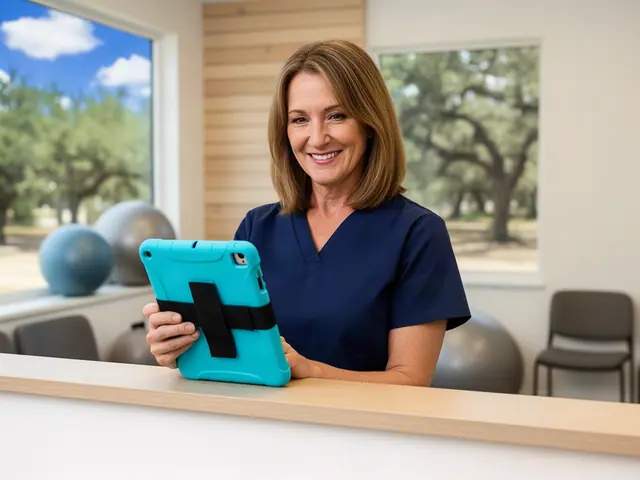
Canyonwick Finance, a small-business funding broker in New Braunfels, TX, helps Comal County medical, dental and other health practices compare equipment financing, working capital and term loans. The county had 151 physician offices and 73 dental offices as employers in 2023. Lending partners review each practice, decide and set all terms.
| Comal County, TX practices | 412 ambulatory health care employers (CBP 2023) |
|---|---|
| Physician offices | 151 employers, 1,228 paid employees |
| Dental offices | 73 employers, 34.2% under five employees |
| Sector payroll | Health care and social assistance, about $473.4 million (largest) |
| Common options | Clinical equipment financing, claim-gap working capital, term loans |
Comal County, TX practices by the numbers
Comal County had 412 ambulatory health care employer establishments in 2023, with 3,495 paid employees and about $235.1 million in annual payroll. About half, 51.5 percent, had fewer than five employees (U.S. Census Bureau, County Business Patterns 2023).
| Practice type | Employer establishments | Paid employees | Share under five employees |
|---|---|---|---|
| Offices of physicians (NAICS 6211) | 151 | 1,228 | 57.0% |
| Offices of dentists (NAICS 6212) | 73 | 578 | 34.2% |
| Total ambulatory health care (NAICS 621) | 412 | 3,495 | 51.5% |
Health care and social assistance as a whole carried the largest payroll of any sector in the county, about $473.4 million. A separate survey counted 919 ambulatory health care businesses with no paid employees in 2024, including 190 physician offices and 45 dental offices (U.S. Census Bureau, Nonemployer Statistics 2024); those are different years and populations, so do not add them to the employer counts.
Dental office and clinic financing
Dental offices stand out in the figures: only 34.2 percent had fewer than five employees, so a typical office carries hygienists, assistants and front-desk staff. Dental office financing often covers chairs and delivery units, imaging, sterilization equipment and the build-out of operatories. Each piece can be financed separately on a term matched to its life, or a larger project can be covered by a term loan.
Medical clinic and healthcare equipment
Medical clinic financing usually centers on healthcare equipment financing: diagnostic and imaging equipment, exam tables, lab instruments and practice software. Medical device financing works the same way as other equipment financing, with the device as collateral, though partners look closely at how quickly technology in that category ages. Chiropractic equipment financing, for adjusting tables, therapy units and imaging, follows the same pattern.
Leasing is common for equipment that will be replaced on a short cycle. Buying with a loan or EFA is common for equipment the practice expects to use for many years. Ask your accountant how each choice affects taxes before deciding.
The insurer payment gap
A practice pays staff and rent on a fixed schedule but collects from insurers after claims are processed. Growth makes the gap larger, not smaller: a new provider or a second location adds costs immediately and collections later. Working capital financing can cover a defined gap; a line of credit suits a recurring one. Partners usually want to see accounts receivable by payer and age.
A merchant cash advance is not a loan and is a poor fit for most practices, since much of their revenue arrives from insurers rather than daily card sales.
Buying into or expanding a practice
Practice acquisitions, partner buy-ins and second locations involve larger amounts and longer terms. Partners review the practice's collections history, payer mix, the lease and the experience of the providers involved. Getting a valuation and a clear purchase agreement early makes those reviews smoother.
Leasing or building out clinical space
Clinical space usually needs more work than a typical office: plumbing for operatories, dedicated electrical circuits, shielding for some imaging, and accessible layouts. Those costs belong on a contractor's estimate before any financing request, and the lease should say who pays for which improvements and what happens to them when the lease ends.
Settle the premises questions with the city before signing; our premises checklist lists them. Partners funding a clinical build-out typically ask for the lease, the estimate and a timeline to opening.
What partners usually review
- Business bank statements and practice financial statements
- Accounts receivable aging by payer
- Tax returns for the practice and, often, the owners
- Equipment quotes with model and installation details
- The lease or property documents for any expansion
Other sector pages cover contractors and restaurants. The local business profile shows 337 health care and social assistance employers in the office ZIP, 78130 (ZIP Code Business Patterns 2023).
By Canyonwick Finance · Updated